Adjustable beds · Mattress compatibility
How to Match a Mattress to an Adjustable Base
An adjustable bed base changes shape beneath you. For the movement to feel smooth and the sleep surface to remain supportive, the mattress must be able to flex with the frame—and be approved for that use. Check construction, dimensions, weight limits and warranty terms before pairing the two.
A bed that moves is a system, not a single product
A conventional bed holds a mattress on a level surface. An adjustable base adds motion: sections of the platform rise and lower, changing the angle beneath the head, legs or both. The mattress must follow those contours without resisting the frame, sliding out of place or concentrating stress in a way that affects comfort or durability.
That makes compatibility more specific than simply finding a mattress that feels comfortable in a showroom. The important question is whether the particular mattress is designed and warranted to articulate on the particular base. Two mattresses with similar labels—such as “pocket spring” or “memory foam”—can behave differently because their materials, internal construction, borders and joining layers differ.
The Clean Bedroom Level 2 Adjustable Bed Base offers independent head and foot adjustment, along with preset positions and a wireless remote. Those functions make it possible to raise or lower sections separately, but they do not establish that every mattress will work with the base. Confirm the approved mattress types and size requirements in the current instructions for both products before installation.
In other words, the base supplies the movement; the mattress has to accommodate it. A careful match protects the intended feel of the sleep surface and helps the mechanism move as designed.
Start with the manufacturer’s compatibility guidance
Before comparing materials or firmness, find the written guidance for the exact mattress model and base model. Product families can include different constructions, and specifications may vary by size or production year. A general claim that a brand makes “adjustable mattresses” is not a substitute for confirmation about the model you plan to use.
Look for clear answers to these questions:
- Is the mattress approved for use on an adjustable base, including one with independently moving head and foot sections?
- Are there limits on mattress thickness, weight, or the type of foundation beneath it?
- Does the base require a particular mattress retainer, attachment, or setup procedure?
- Will using the mattress on an adjustable base preserve its warranty?
- Are there restrictions on split sizes, paired mattresses or the use of a topper?
When the information is unclear, contact the manufacturer or retailer with the full model names and sizes. Keep the response with your purchase documents. Warranty language matters: a mattress might physically bend on a base yet still be outside the conditions under which it is intended to be used. Likewise, the base may specify a maximum supported load that includes the mattress and occupants. Check the actual documentation rather than relying on assumptions.
Compatibility should be treated as a product-specific fact, not inferred from price, perceived quality or a material’s reputation. A mattress’s ability to flex in a demonstration does not by itself confirm long-term suitability.
What mattress construction tells you—and what it doesn’t
Construction offers useful clues about how a mattress may respond to movement, but no single material label guarantees compatibility. The complete design matters: the support core, comfort layers, upholstery, edge construction and the way those layers are joined all contribute to how a mattress bends and recovers.
Foam and latex designs
Many foam mattresses can bend along a base’s articulated sections, but foam types differ in density, firmness and resilience. A relatively flexible comfort layer may sit above a core that is too rigid for the movement allowed by a particular frame. Latex can be springy and responsive, but its behaviour also depends on the mattress’s overall construction and the maker’s specifications. Ask whether the exact model is approved; do not rely on the material name alone.
Pocket springs and other spring systems
Spring mattresses range widely. Individually pocketed coils can move more independently than some interconnected systems, but that observation is not proof that a specific pocket-sprung mattress is suitable for a powered base. Coil height, spring arrangement, perimeter reinforcement and the layers above the springs can all affect articulation. The mattress may also be designed for a traditional flat foundation, with no testing or warranty provision for repeated bending.
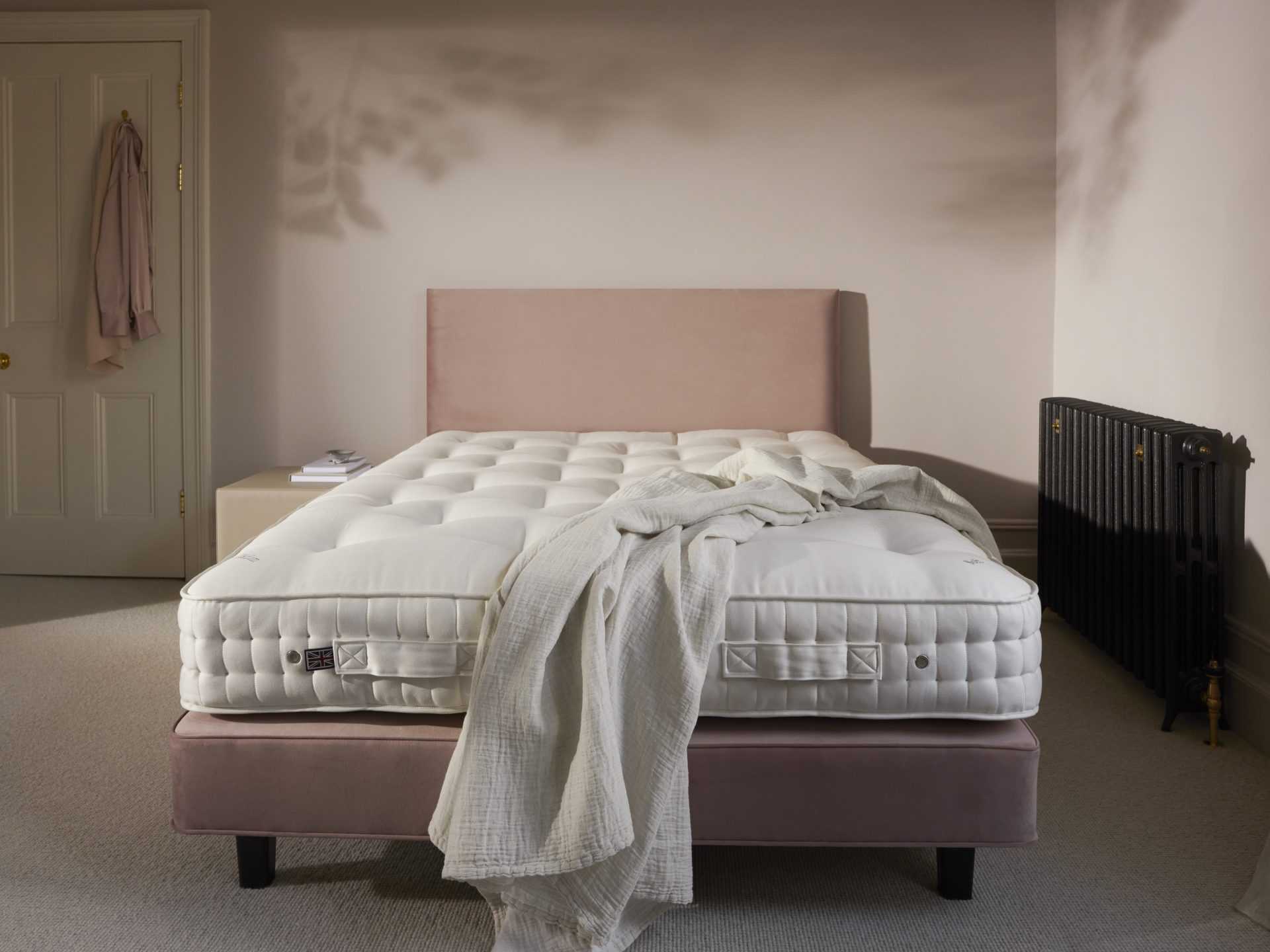
For example, the product details for the Vispring Coronet Mattress describe hand-nested calico pocket springs, natural fillings and a hand-tufted construction. Those details help a reader understand what is inside the mattress, but they do not, on their own, establish adjustable-base compatibility. Confirm directly with the manufacturer and base supplier before pairing it with a moving frame.
Natural fillings and tailored upholstery
Wool, cotton and other natural fibres are used in mattress upholstery for qualities such as breathability and cushioning. In a finished mattress, however, the way those fillings are layered, secured and supported influences how the whole unit responds to bending. Hand-tufting and reinforced borders are construction features, not automatic indicators for or against compatibility. The same principle applies to luxury mattresses: craftsmanship and premium materials do not replace an explicit suitability statement.
The Vispring Elite, for instance, is described as having natural wool-and-cotton upholstery over a pocket-spring system. That information can help frame questions about construction, but it should not be read as confirmation that the mattress is designed for an adjustable base. Check the specifications for the exact model and size.
Hybrid mattresses
Hybrid designs combine foam, latex or other comfort materials with a spring unit. Their flexibility depends on the combined layers and their construction, so the word “hybrid” is not enough to determine whether a model will articulate. Ask how the mattress is intended to perform on a moving foundation and whether any particular base type is required.
Flexibility should not mean losing support
A compatible mattress should follow the base as it changes angle while continuing to feel stable and comfortable. If a mattress resists bending, the frame may struggle to move it smoothly, or the surface may lift away from the platform in places. If it bends but shifts, bunches or feels uneven, movement may undermine the support you chose it for. The goal is not maximum softness; it is controlled flexibility within the product’s intended use.
Comfort remains personal. A mattress that feels supportive when flat may feel different when the head or legs are raised. The angle changes how the body settles into the sleep surface and how pressure is distributed. If possible, test the intended combination in person, using modest adjustments and the positions you expect to use regularly. Notice whether the mattress stays aligned, whether the surface remains comfortable and whether the movement feels smooth.
Firmness labels are not universal measurements. “Medium” in one collection may feel quite different from “medium” in another, and firmness does not tell you whether a mattress can bend safely. Assess support and compatibility as separate questions: first establish that the model is approved for the base, then judge whether its feel suits you.
For health concerns, an adjustable position may feel helpful to some people, but a bed base is not a treatment. It cannot guarantee relief from pain, reflux, snoring or circulation problems. Anyone relying on a specific position for a medical reason should seek appropriate clinical advice.
Check size, weight and the way the bed is assembled
Correct dimensions help the mattress sit within the moving platform and line up with its sections. Compare the mattress’s stated length and width with the base specification, including any split configuration. A mattress that is too large may overhang or catch; one that is too small may not be held securely. Do not assume that similarly named sizes have identical measurements across manufacturers or markets.
Weight is another practical detail. A base has a stated capacity, and the total load can include the mattress, occupants and bedding. Check the manufacturer’s calculation and stay within the limit. A heavy mattress may also affect how readily a powered mechanism moves, even when it is within the stated capacity.
For a split arrangement, verify what moves independently and what remains joined. A split King setup, for example, may allow two sides to adjust separately, but mattress format and base design determine how that works in practice. Confirm whether the system requires two separate mattresses, a split-head mattress or another configuration. Do not assume that one mattress can span independent moving sections without affecting movement or comfort.
Follow the assembly instructions closely. Place the base on a suitable, level surface, secure any required retainer and position the mattress as directed. Keep cords clear of moving parts and make sure there is space around the frame for articulation. If the manufacturer specifies a compatible bed frame or leg arrangement, use those instructions rather than improvising.
A practical way to compare adjustable bed mattresses
When comparing adjustable bed mattresses, use a short checklist to separate marketing language from details that affect day-to-day use:
- Confirm model-level approval. Find written confirmation for the mattress and base you intend to combine.
- Read both sets of instructions. Check size, thickness, weight and foundation requirements for each product.
- Understand the construction. Note the support core and comfort layers, but treat these as context—not a substitute for approval.
- Check the warranty. Confirm that the planned setup and ordinary adjustment are allowed under its terms.
- Test the combination if possible. Try the positions you expect to use and pay attention to alignment, comfort and smooth movement.
- Ask about accessories. A topper, protector or bedding attachment can change how the system sits or moves, so check any relevant guidance.
- Keep records. Save specifications, instructions and written answers with your receipts.
This process is useful whether you are considering foam, latex, pocket springs or a hybrid. It also prevents a common mistake: choosing a mattress based on construction language alone and only checking compatibility after delivery.
Using the Clean Bedroom Level 2 base
The Clean Bedroom Level 2 Adjustable Bed Base is described with independent head and foot lift, massage, under-bed lighting, USB ports and a wireless remote. Its preset options include positions such as Flat, TV, Zero Gravity and Anti-Snore. These controls shape how the base can be used, but compatibility still depends on the mattress’s own design and its manufacturer’s guidance.
Before ordering, compare the base size you need with the mattress measurements, and ask the supplier to verify the combination. The base is available in multiple configurations, including Twin XL, Queen, King and split options; the exact dimensions and arrangement should be checked for the selected model. Confirm that the mattress is suitable for the specific configuration rather than assuming that compatibility in one size transfers automatically to another.
When setting up the system, begin with the base flat and the mattress correctly centred. Use the remote to make gradual adjustments, checking that the mattress follows the platform and remains in place. Do not force a control or continue operating the base if the mattress catches, shifts unexpectedly or the mechanism appears obstructed. Return the base to flat if needed, inspect the setup safely and consult the relevant instructions or support team.
Features such as a preset position or massage function are conveniences, not evidence that a particular mattress will work with the frame. The manufacturer’s compatibility and operating instructions remain the authority for the system.
Common compatibility mistakes to avoid
- Assuming all mattresses bend alike. Material labels cannot describe every layer and structural detail.
- Equating flexibility with approval. A mattress bending during a quick test does not establish its intended use or warranty status.
- Choosing by firmness alone. Firmness describes perceived feel, not whether a mattress can articulate.
- Ignoring measurements and load limits. Fit and weight affect how the system operates.
- Overlooking split configurations. Independent movement requires the correct mattress arrangement.
- Adding accessories without checking. Toppers and other layers may shift or change the way the mattress sits.
- Relying on a general brand claim. Verify the precise model, size and base combination.
These checks may seem small beside the choice of upholstery or controls, yet they determine whether the bed functions as a coordinated system. A thoughtful match is more likely to preserve comfort and avoid avoidable strain on the mattress or frame.
The right pairing begins with evidence
An adjustable base can make a bed more adaptable to reading, resting or changing position through the night. To get the benefit of that movement, choose a mattress whose manufacturer expressly supports use on an adjustable foundation, then verify dimensions, weight limits and warranty conditions. Construction details help explain how a mattress is made; only model-specific guidance can establish whether that mattress is intended for a particular moving base.
For the Clean Bedroom Level 2, that means treating independent head and foot adjustment as a reason to check compatibility carefully—not as a promise that every mattress will fit. Ask clear questions before purchase, test the complete setup when possible and follow the operating instructions. When the base and mattress are designed to work together, the movement beneath the sleep surface can feel less like a mechanical adjustment and more like a natural change in posture.